← The Framework01

Foundation

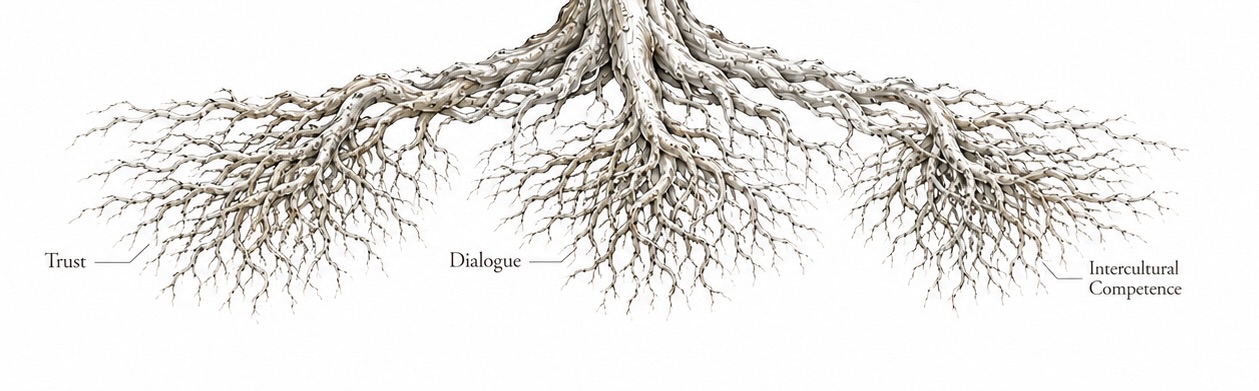
Intercultural competence provides the capacity to navigate cultural difference. Through dialogue, that capacity creates space for understanding and exchange, while trust serves as the foundation for collaboration.

Root system diagram: Trust, Dialogue and Intercultural Competence as the roots of the framework
The roots of trust, dialogue and intercultural competence — the Foundation of the framework

Trust

How do different cultural expectations shape the way trust is built?

Trust is not to be assumed but to be intentionally cultivated. Trust creates a space for effective collaboration by limiting energy spent on self-protection.

Trust can be built through different signals across cultures. For some, competence, reliability and professional credibility may establish confidence; for others, personal connection, empathy and relationship may be more important. Recognizing these differences can help collaborators understand what trust looks like to one another rather than assuming their own expectations are universal.

Building trust is not only about assessing whether someone is trustworthy, but also reflecting on how we demonstrate our own trustworthiness. This makes trust a reciprocal practice rather than a one-way assessment.

Dialogue creates space to make these expectations visible—to ask what trust means to one another, clarify what builds confidence, and negotiate how trust can be developed within the relationship.

Dialogue

How can dialogue help us navigate cultural difference?

Intercultural dialogue is part of cross-cultural collaboration. The question is how to use it strategically, with intention rather than reaction. Dialogue is not a solution to cultural difference, but a strategic tool for navigating it — creating space to bridge differences, question assumptions and navigate conflict.

Effective dialogue requires more than speaking. It asks us to listen openly to perspectives that may differ from, or even challenge, our own. Approaching these exchanges mindfully means recognizing that people bring different lived experiences, relational norms and cultural expectations into the interaction. Through this exchange, space for authentic expression can emerge and trust can begin to grow.

Intercultural Competence

How do we navigate cultural difference without relying on our own assumptions?

Navigating cultural difference requires more than awareness of other cultures. It requires awareness of our own cultural assumptions and the ability to create space for different perspectives.

Intercultural competence provides the capacity to navigate culturally diverse settings by stepping outside our own ways of thinking and engaging with how others understand the world. This creates opportunities to listen, learn and develop deeper understanding across difference.

In practice, this means remaining open to perspectives that may challenge our own, while negotiating and adapting without losing yourself. Cultural Intelligence provides the framework for developing these capacities, which are explored further in the Mediation stage.