The Framework
Three stages of navigating cultural difference, with dialogue flowing through each.
Intercultural competence provides the capacity to navigate cultural difference. Through dialogue, this capacity can be put into practice, creating space to build, sustain and deepen trust within collaboration.
The framework develops this practice through three stages: Foundation, Mediation and Alignment, each addressing a different part of navigating cultural difference.
Dialogue does not guarantee resolution; it can also help reveal when a collaboration may need to end.
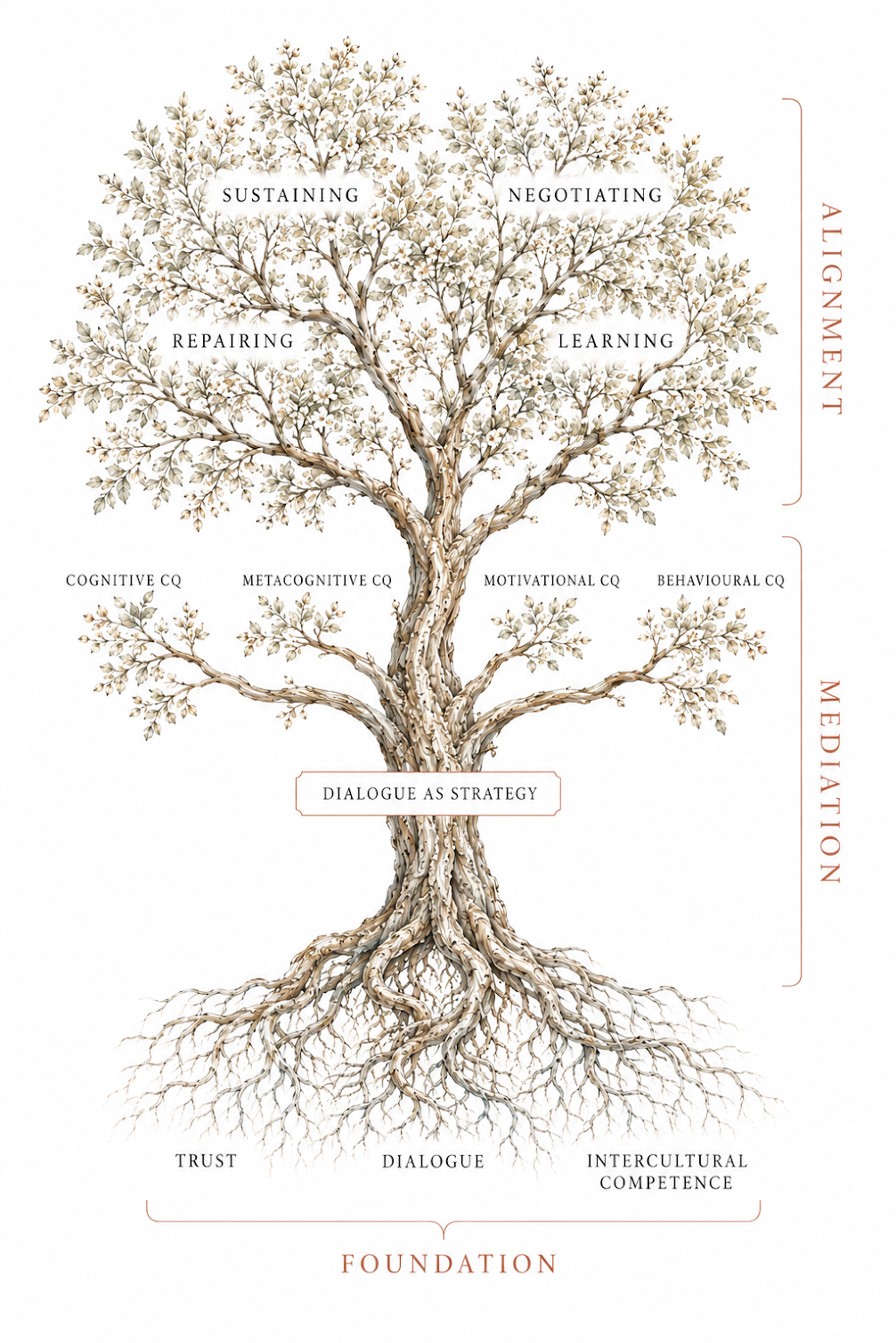
This framework draws on and synthesises existing theoretical perspectives. Central to the framework is Ang and Van Dyne's Cultural Intelligence (CQ), alongside contributions from Luhmann, Meyer, Molinsky, Ting-Toomey, UNESCO and Harvard Business Review.
Foundation
What creates the conditions?
Read more02Mediation
How do we navigate difference?
Read more03Alignment
How do we sustain what develops?
Read moreOriginally developed alongside my MA thesis, this site documents the framework that emerged during the MA and continues to evolve as I develop my intercultural practice.