← The Framework02

Mediation

Intercultural competence becomes practical through understanding, reflection, engagement and adaptation across cultural difference. Cultural Intelligence provides a framework for developing these capacities.

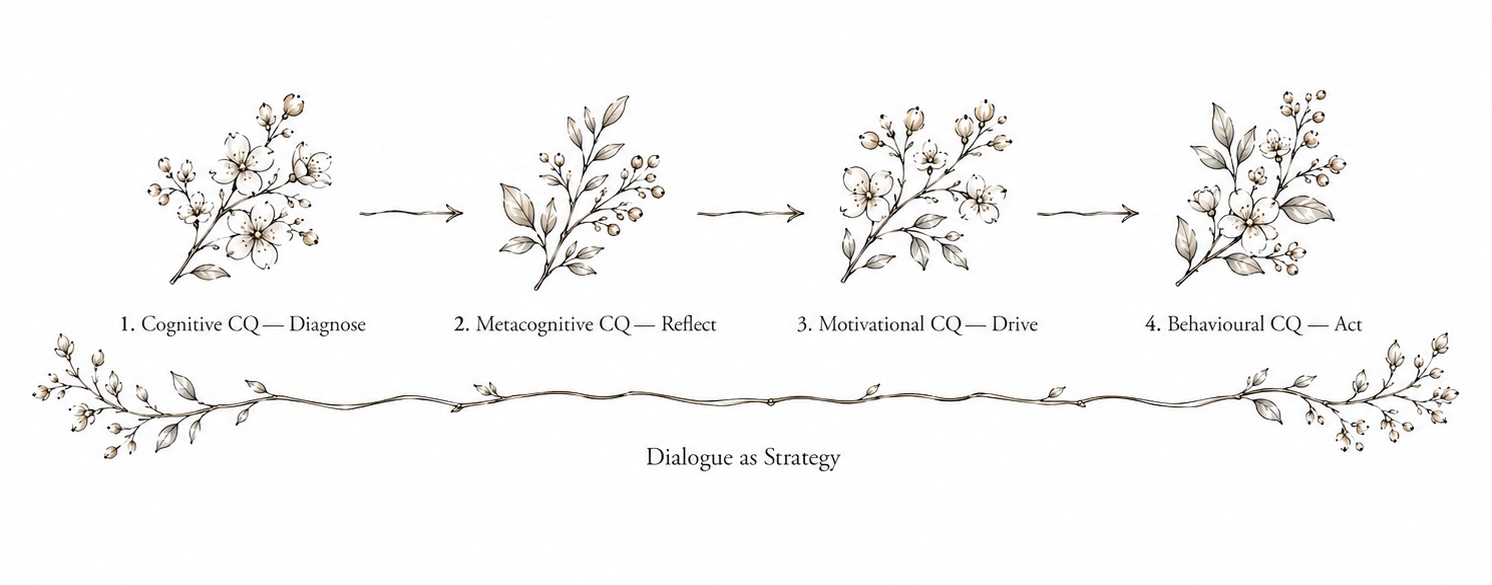
Four flowering branches in sequence representing the four dimensions of cultural intelligence, above a branch labelled Dialogue as Strategy
The four dimensions of Cultural Intelligence as a mediation roadmap (based on Ang and Van Dyne, 2008)

Understanding the Context

Cognitive CQ

What do I need to understand before entering a different cultural context?

Cognitive CQ provides a foundation for navigating cultural difference by learning about another cultural context before and during an encounter. Cultural systems, norms, values, communication styles and expectations around trust can all shape how people interpret and respond to one another.

This knowledge can help reduce misunderstanding and friction, but it should not be treated as fixed. Culture does not define an individual or an organization, and cultural patterns can vary within and across contexts. The aim is to develop informed starting points while remaining open to what the encounter reveals.

For example, communication styles can vary from more explicit and direct to more implicit and indirect. Recognizing these differences can help collaborators interpret meaning within its cultural context rather than automatically through their own cultural lens.
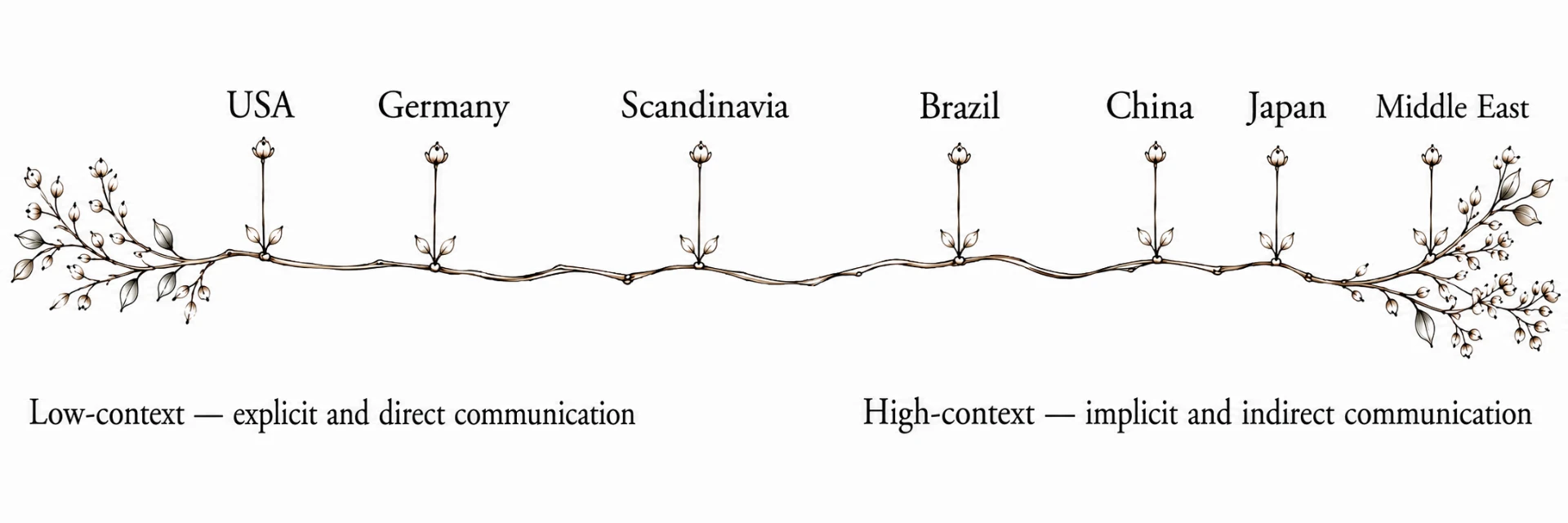
Context spectrum from low-context to high-context communication
Communication style spectrum — low-context to high-context (based on Meyer, 2014)

During the encounter, dialogue builds on this preparation by creating opportunities to ask questions, clarify meaning and challenge assumptions.
Reflecting in the Moment

Metacognitive CQ

How do we remain aware of our assumptions while navigating an interaction?

When knowledge becomes active in the moment of interaction, metacognitive CQ creates space to be flexible, adaptive and reflective. It involves noticing and questioning our own cultural assumptions, and recognizing how our own cultural background shapes the way we interpret an interaction. This allows us to adjust in response to what is happening rather than reacting through what we already expect.

Through listening, responding and adjusting, interactions can become a process of mutual learning. The empathetic feedback loop illustrates this process: each person responds to the other's words, actions and cues, creating an ongoing exchange in which understanding is continually shaped and refined.

In cross-cultural collaboration, this means treating interaction as something that can be learned from in real time — using dialogue to remain responsive to difference and move toward greater alignment.

Willingness to Engage

Motivational CQ

How willing are we to invest in the encounter?

The depth of engagement depends on motivation. Genuine interest can influence how much energy, effort and reflexivity we bring to an intercultural encounter. The more deeply we engage, the more willing we may be to listen, adapt and remain curious when difference requires effort.

Motivation can move engagement beyond simply acquiring cultural knowledge or demonstrating competence. It creates space for genuine curiosity and human connection, allowing collaboration to develop through the quality of the interaction rather than competence alone.

Dialogue gives that motivation a way to be expressed through the encounter—by asking questions, listening with genuine curiosity and remaining open to perspectives that may challenge our own. Through this deeper engagement, stronger conditions for trust can develop.

Adapting in Practice

Behavioural CQ

How do we adapt our behaviour across cultural difference without assuming what is “appropriate”?

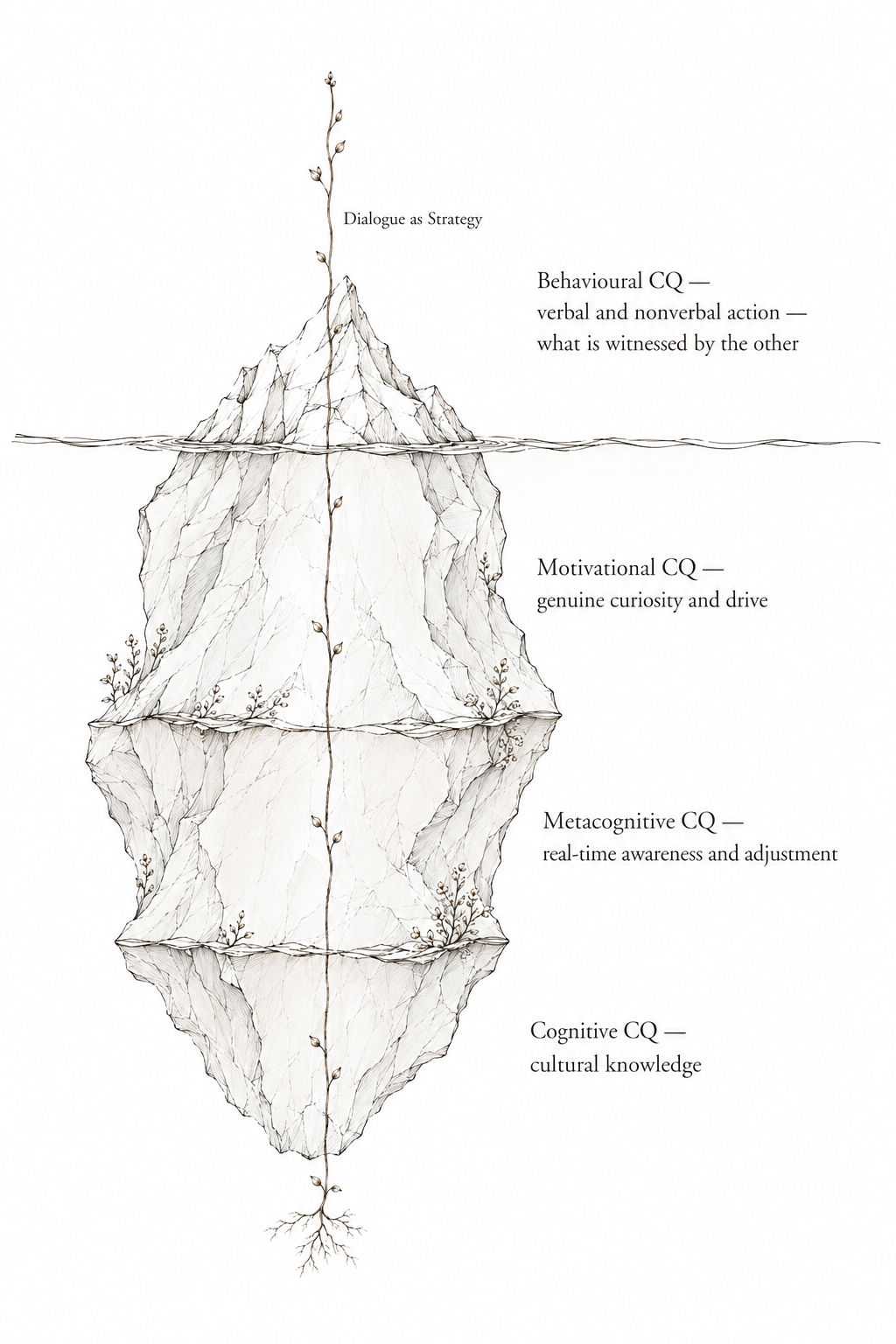
Behavioural CQ is where the internal work of understanding, reflection and motivation becomes visible through action. This can include how we communicate verbally and non-verbally through tone, expression, movement and gesture.

Iceberg diagram with Behavioural CQ above the waterline and Motivational, Metacognitive and Cognitive CQ below
The CQ Iceberg: internal processing made visible through action

What feels natural or appropriate in one cultural context may be interpreted differently in another. Adapting across difference therefore requires observing with openness and adjusting with awareness, rather than assuming that unfamiliar behaviour is wrong or negatively intended.

Dialogue creates an opportunity to test our interpretations and adjust through interaction, rather than relying on assumptions about what the other person needs or expects. This can mean asking, listening and responding to what emerges in the encounter.

Adaptation does not mean abandoning who we are. It involves developing the flexibility to respond responsively to the context while remaining aware of ourselves. This is where the internal processing of CQ becomes practice — and where trust can begin to develop through what we experience from one another.